The honest answer: it depends
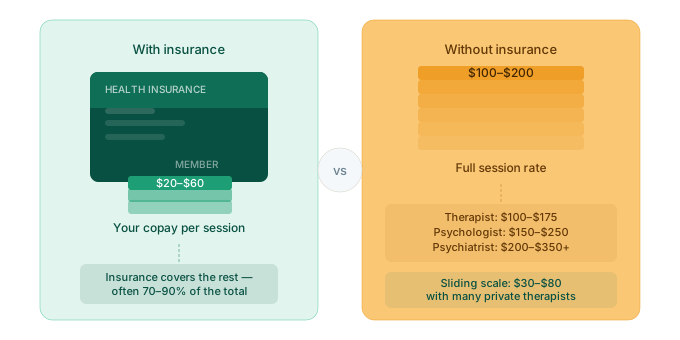
Therapy costs vary significantly based on provider type, location, insurance status, and whether you're seeing someone in private practice or a community setting. Here's what you can actually expect to pay in 2026.
Therapy costs without insurance
| Provider type | Average session cost | Range |
|---|---|---|
| Psychologist (PhD/PsyD) | $200 | $150–300 |
| Licensed therapist (LCSW, LPC, LMFT) | $150 | $100–250 |
| Psychiatrist (medication management) | $300 | $200–500 |
| Telehealth therapist | $100 | $60–200 |
| Sliding scale therapist | $60 | $20–100 |
| Community mental health center | $0–40 | $0–80 |
| University training clinic | $0–30 | $0–50 |
Therapy costs with insurance
With in-network insurance coverage, most people pay a copay of $20–60 per session after their deductible is met. The national average copay for in-network outpatient mental health services is approximately $30–45.
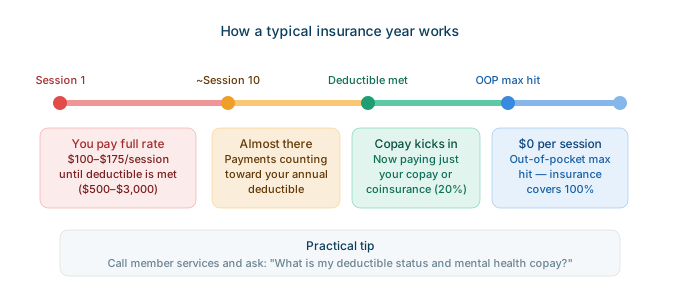
If you haven't met your deductible, you'll pay the provider's contracted rate with your insurer — typically $80–130 per session — until your deductible is met. After that, you pay only your copay.
Costs by location
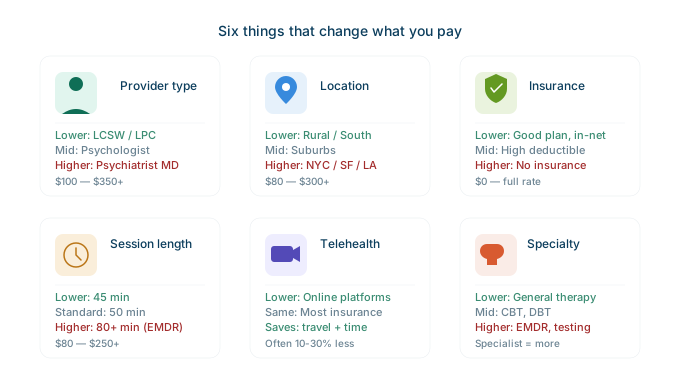
Therapy costs vary significantly by geography. Major metro areas like New York, San Francisco, and Los Angeles average $200–300 per session for private practice therapists. Mid-size cities average $120–180. Rural areas and smaller markets typically run $80–140. Telehealth eliminates geographic cost differences — you can see a therapist anywhere in your state at a standardized rate.
How to reduce your costs
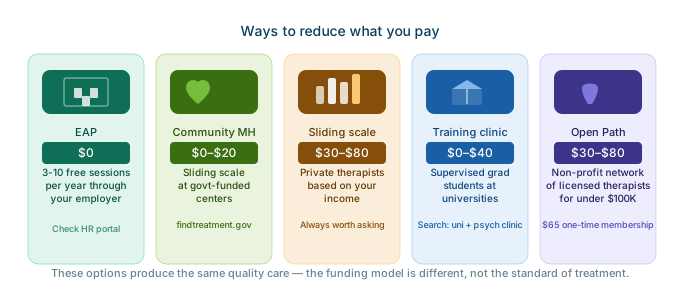
- Use your insurance — call and confirm your benefits before assuming you're not covered
- Ask for a sliding scale — many therapists offer reduced fees for financial hardship
- Use your EAP — most employers offer 3–8 free sessions through an Employee Assistance Program
- Try telehealth — typically $20–50 less per session than in-person
- Consider group therapy — same evidence base as individual therapy at 50–70% lower cost
- Use an HSA or FSA — pay for therapy with pre-tax dollars, effectively reducing cost by your tax rate
Is therapy worth the cost?
Research consistently shows therapy is cost-effective when compared to the economic burden of untreated mental health conditions — including lost productivity, increased medical utilization, and reduced quality of life. The question is often not whether you can afford therapy but how to access it at a price point that works for your situation.